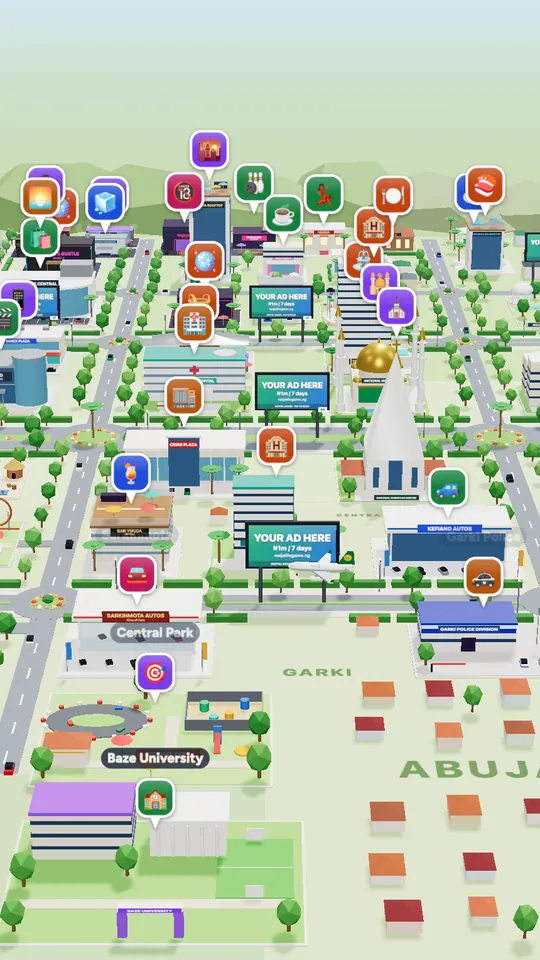
Abuja has been Nigeria's capital since 1991, when the government moved from Lagos. It is a planned city in the Federal Capital Territory, at the centre of the country, and it feels very different from Lagos: wider roads, more greenery, less noise and a slower pace. Here is what life in Abuja is really like. For the other side of the story, read life in Lagos, Nigeria.
The areas
- Maitama and Asokoro: diplomats, senior officials and big houses. The most expensive parts of the city.
- Wuse and Wuse 2: Wuse Market, Banex Plaza, restaurants and nightlife. Busy and central.
- Garki and the Central Area: government offices, banks, the National Mosque and the National Christian Centre.
- Jabi, Utako and Life Camp: Jabi Lake, malls and newer estates.
- Gwarinpa: one of the largest housing estates in West Africa, popular with families.
- Kubwa, Lugbe, Nyanya and other satellite towns: much cheaper rent, and the long daily commute into the city that comes with it.
Work
Government is the biggest employer: ministries, agencies, the National Assembly and the courts. Embassies, international organisations, NGOs, consultancies, banking and a growing tech scene follow. Trading never stops at the big markets. Many people in Abuja work for or with government, which shapes the rhythm of the city.
Rent and cost of living
Rent in central Abuja is high, often higher than many Lagos areas, and landlords usually want a year or more upfront. That is why so many workers live in the satellite towns. Food in the markets can be cheaper than in Lagos, and most people find power supply somewhat better, though generators are still common.
Getting around
Traffic is lighter than in Lagos inside the city, but the roads from the satellite towns, such as the Nyanya and Kubwa expressways, get heavily congested at rush hour. People move by taxi, bus, ride-hailing apps and private car; okada are restricted in the city centre.
Food and weekends
Abuja's food mixes the whole country: suya, kilishi, masa, tuwo and fura da nono next to pepper soup, amala and jollof. Weekends mean Jabi Lake, Millennium Park, the Arts and Crafts Village, lounges in Wuse 2 and visits to family. Aso Rock rises over the city, and Zuma Rock sits just outside it on the road north.
Weather
Abuja sits higher than Lagos, so nights are cooler. The rainy season runs from roughly April to October, and the dusty harmattan from about December to February is stronger than on the coast.
Lagos or Abuja?
Lagos is bigger, louder and richer in private business. Abuja is calmer, greener and built around government. Many Nigerians live in one and visit the other often.
Try Abuja life in Naija Life
In Naija Life, Abuja is a full city: homes from a single room in Kubwa and a mini flat in Gwarinpa to a detached house in Maitama and a mansion in Asokoro; Wuse Market, Banex Plaza, Jabi Lake Mall, Millennium Park and the Arts and Crafts Village; and 12 Abuja jobs including civil service and legislative aide. You can move there for free or fly in for a visit.
Questions people ask
What is life like in Abuja, Nigeria?
Calmer and greener than Lagos, built around government, with high rents in central areas such as Maitama and Asokoro and cheaper satellite towns like Kubwa and Lugbe.
When did Abuja become the capital of Nigeria?
In December 1991, when the federal government moved from Lagos.
What are the best areas to live in Abuja?
Maitama, Asokoro, Wuse 2, Jabi and Gwarinpa are popular; Kubwa, Lugbe and Nyanya are cheaper with longer commutes.
Is Abuja more expensive than Lagos?
Central Abuja rent can be as high as or higher than many Lagos areas, while food is often cheaper. Overall cost depends on where you live.
Can I play an Abuja life game?
Yes. Abuja is one of the cities in Naija Life, a free 3D life simulator on Android, iPhone and the browser.